

Beat the Summer Heat with Essential Car AC Maintenance Tips
Nothing ruins a healthy summer mood faster than a climate control system that is not working efficiently and keeps blowing lukewarm air instead of cold air. Gaining hands-on knowledge that is required for car AC maintenance tips gives a sense of comfort on the long-route journeys, saves fuel, and prevents costly repairs down the line. If you want to fix the musty smell that keeps coming from your dashboard or want to keep your system in top shape year-round, simple habits make a massive difference in performance.
The Benefits of Staying Ahead of Car AC Maintenance
The air conditioning unit in your vehicle is a closed system with mechanical parts, high-pressure gas, and filter sections. Through time, heat, road debris, and vibration damage seals and cause the filtration layers to become clogged. Keeping an anticipatory check and balance will ensure that you are prepared for those hot days to come.
- Saves Fuel: The inefficient system will strain your engine to work harder, pulling more fuel.
- Extends Component Life: By servicing your fluids on time and keeping the pressure consistent, you ensure your expensive components such as your compressor last longer.
- Improves Cabin Air Quality: Fresh filters trap incoming pollen, dust, and airborne pollutants before you breathe them in.
Smart Everyday Habits to Extend Your Car AC System Life
Only a qualified technician is not capable of keeping your system working smoothly. If you add a few smart measures into your daily commuting habit, you will drastically reduce wear and tear.
1. Vent Hot Air Before Turning On the AC
When your vehicle is exposed to direct sunlight, the interior temperature can spike past 130°F. In such a case, if you directly give access to cold air, forcing it to work against the extreme heat will weaken the operation. Firstly, roll down your windows for a minute after starting the engine and let the trapped hot air escape prior to blasting the cabin with cooling.
2. Skip Pre-Cooling While Idling
The air conditioning system functions most efficiently if the engine is running and circulating coolant through the system. Waiting in your driveway in a stationary position does not only waste fuel but also takes twice the time. Start moving your car right away, open the rear windows for a few seconds to get rid of the heat, and allow the air conditioning to cool down gradually on its own.
3. Run the System on the Coldest Setting and Adjust the Fan
It might sound surprising, but having your temperature set to the lowest possible value actually places less strain on the system. The air is cooled down to a certain level by most systems; when you have it set to medium-warm, the heater core blends hot air back into the mix. To stay comfortable, set the temperature to maximum cold and simply adjust the fan speed.
Key Maintenance Tasks You Can Do Yourself
The big mechanical repairs need specialized equipment; there are several jobs that are quite simple and can be done during an ordinary weekend of DIY work.
Key DIY Maintenance Checks
- Check filter condition every 12,000-15,000 miles; replace when filter is dirty or black.
- Clean the grid of leaves, dirt, and road grime in order to ensure airflow.
- Apply disinfectant spray in the intake vents to eliminate odor-causing bacteria.
- Turn on the defrosting mode once a week for 10 minutes to lubricate rubber seals.
Cabin Air Filter Replacement
A blocked air filter will prevent airflow, giving you the feeling that your blower motor needs replacing. You should replace a cabin air filter every 12,000 to 15,000 miles to keep air blowing hard and clean and not face the problem of poor airflow. Most filters are usually situated behind the glovebox and take no more than ten minutes to swap out without any tools.
Disinfecting Car Air Vents
When you start the fan and notice a damp, stale odor, it can be caused by the accumulation of moisture in the internal evaporator core, which gives room to the growth of molds. Car air vent cleaning using sprays for the intake vents gets rid of the accumulation and gives you fresh air free of any odor.
Clearing Debris and AC Condenser Cleaning
The condenser is placed in the front part of your car behind the grille, where it is directly revealed to the road bugs, dirt, and autumn leaves. A blocked grill will not be able to blow the heat effectively. Routine AC condenser cleaning using a gentle water hose spray washes away grime and maintains unrestricted airflow.
Off-Season Habits: How to Keep the System Healthy Year-Round
Many motorists neglect their climate control system from October till April, although such a long time of ignorance is actually damaging to seals inside.
Should I run my car's AC during winter?
Yes, you absolutely should run your system during cold weather. Activating the defrosting mode of the system for 5 to 10 minutes every few weeks is necessary to circulate oil, which mixes with the refrigerant, keeping the rubber seals moist and preventing any internal leakages and keeping the compressor from seizing after months of inactivity.
When to Seek Professional Service
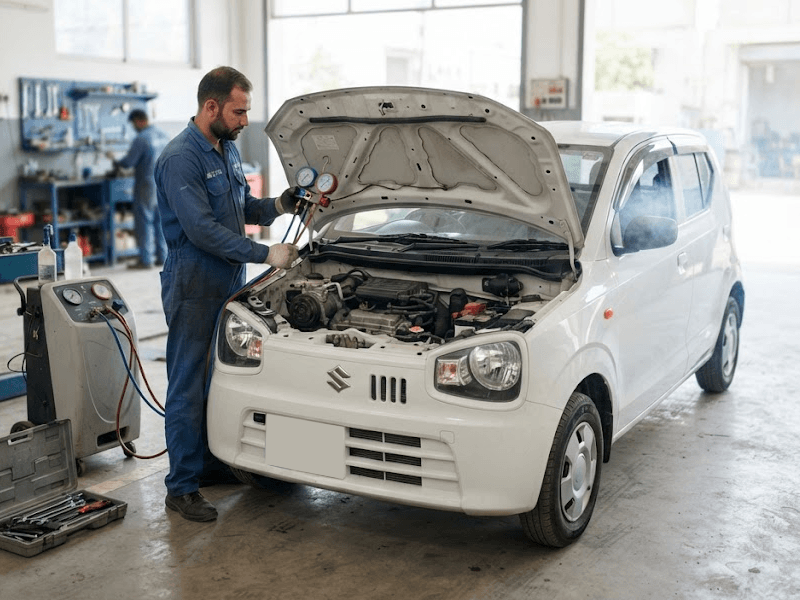
Some tasks require specialized gauges, vacuum pumps, and technical knowledge. Knowing how to maintain car air conditioner hardware includes knowing when to hand the job over to a certified shop.
- Checking AC Refrigerant Pressure: In case the unit stops producing cold air, the pressure gauges have to be attached in order to measure the amount of liquid inside. Using DIY recharge kits can overpressure the circuit and rupture some elements.
- Car AC Compressor Maintenance: The compressor is the heart of the whole setup. Checking the tension of the belt and the functioning of the clutch, as well as checking electrical connections, can be done only by an expert technician.
- Leak Diagnostics: Frequent pressure drops mean there is some hole in the rubber hose or cracked fitting requiring a dye test to immediately locate the problem.
Categories
Written By

Anus Khan
DPO