

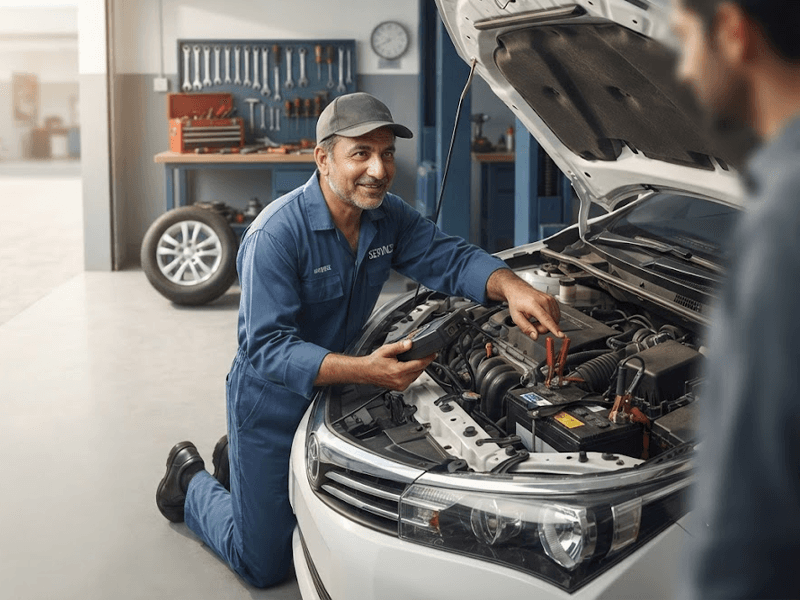
It is not always immediately obvious when the battery of your car starts failing; there are a few signs your car battery needs replacement. Nevertheless, you can notice several important details that can warn you that it is almost dead. Listening to these warning signs can not only assist in avoiding an annoying breakdown, but it also gives you time to change the battery before it leaves you without power.
1. Failure to Start
When you cannot get the car to start when you turn on the ignition, then your battery is probably dead. This usually is the first distinct indication that your battery is not functioning any longer.
2. Engine Trouble with Starting
Although it is not as dangerous as an absolutely dead battery, when your engine sounds weird or alarming when you switch on the ignition, or when it takes longer than normal to start, then your battery may be becoming weak and is about to die.
3. Warning on the Dashboard
We have all had the horrible experience of seeing warning lights on the dashboard. When the small battery indicator on the dashboard comes on, it is not there to look pretty; that is the way your car is trying to tell you that something is not functioning properly and that you may be in need of some sort of attention or replacement.
4. Frequent Jump Starts
The fact that the car battery requires jump-starting more frequently than usual is one of the most obvious signs of car battery problems. When you have been using jump-starts regularly, it is time to consider the possibility of having to replace your battery before it goes dead.
5. Electrical Faults
A faulty battery can be indicated by electrical issues (dimmed lights or a faulty electrical component). When you notice that your electric appliance has regular problems with electricity, it could be time to change your battery or check it.
Car Being Jumpstarted
Car Battery Life? Car batteries have a lifespan of 3 to 5 years, although this will vary depending on your driving patterns, climate, and maintenance. Trips or cold months may deplete your battery.
If you’re an everyday driver, it’s a good idea to start checking your battery annually after the 3-year mark. Checking regularly, particularly prior to winter, can enable you to notice any problems at an early stage and prevent those annoying, unforeseen breakdowns.
What About Electric Vehicles?
EV batteries usually have significantly more life than conventional car batteries, usually 8-10 years, or longer, depending on make and model. They operate on the basis of the development of lithium-ion technology, which is long-lasting and efficient. But even the manner of charging, driving, and storing your EV can influence the lifespan of the battery in the long run. Therefore, EV drivers do not have to be so much concerned, although frequent battery health checks and intelligent charging routines are always helpful.
Why Do Car Batteries Fail?
Car batteries may fail due to various causes, and usually most unexpectedly. You can prevent getting stuck with a dead battery:
1. Battery Sulfation
Prolonged undercharging of a battery causes sulphate crystals to form on the inside plates. This complicates the ability of the battery to store a charge or provide power. Watch out: Slow startup, fluorescent lights, or a battery that fails to retain a charge despite driving. Can it be fixed? Sometimes. Light sulfation can be reversed using special chargers, whereas deep accretion normally indicates that the battery should be replaced.
2. Parasitic Drain
Although your car is off, certain systems consume a small amount of power. But when something is wrong, it may cost your battery excessively. What to be cautious of: Any battery which runs out overnight or after one or two days of not driving. Can it be fixed? Yes. A parasitic draw can be tested, and the faulty component can be repaired by an auto electrician.
3. Corrosion/Loose Connections
The battery terminals corrode, or the cables become loose, and the battery will not charge correctly, and the power flow to the engine decreases. What to look at: Powdery white or green on the battery terminals, or loose cables. Can it be fixed? Yes. It can be sorted out by cleaning the terminals with a battery brush and by tightening the connections. Apply anti-corrosion spray to prevent its occurrence in the future.
4. Extreme Temperatures
Batteries wear out more quickly with heat, and it is more difficult to get the battery working with cold, particularly during the process of starting the car. What to beware of: Winter slow starting or a flat battery that suddenly occurs in summer. Can it be fixed? Not after the damage is done, but by insulating the battery and selecting one that best fits the climate.
5. Old Age or Short Trips
Batteries have a shelf life, and failing to use them or making frequent short journeys does not allow the battery to be recharged adequately, thus wearing out the battery. What to look at: Requires a lot of jump starts or underperforms despite charging. Can it be fixed? No, when the battery is out of its lifespan, a replacement is the most suitable choice.
How to Respond to a Car Battery Failure?
When your car fails to start, this is probable one of a signs your car battery needs replacement because it is a flat or defective battery. Watch the indicators above on how to know whether your car battery is dead or it is near death, such as a slow engine start or red warning lights on the dashboard.
In case you have jump leads and access to another vehicle (or a jump starter), you can attempt to jump-start the car. Should it succeed, allow the engine to operate at least 20 minutes to enable the battery to be recharged. Remember this might be just a temporary solution. If the car still won’t start or you’re unsure what to do, it’s best to call for roadside assistance, which can help and advise accordingly.